Understanding Your Nervous System: What It Is, What It Does and How to Reset It
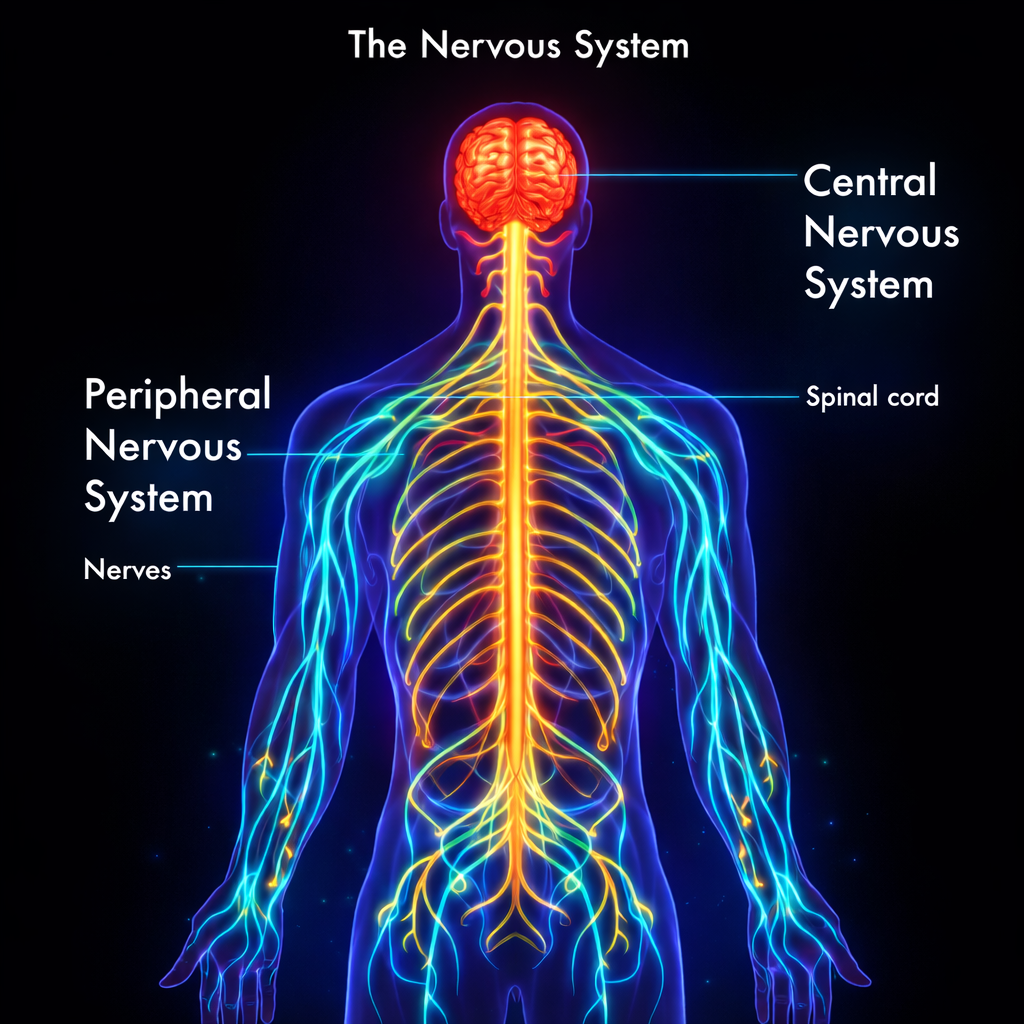
Imagine your body as a city. Your nervous system is the communication network – like phone lines, traffic lights, and internet cables – constantly sending messages back and forth to keep everything running smoothly. It's what helps you move, feel, think, and respond to the world around you.
Let’s explore what it does, how to know when it’s overwhelmed, and how to gently bring it back into balance.
What Is the Nervous System?
In simple terms, the nervous system is your body’s control centre. It’s made up of your brain, spinal cord, and a web of nerves that run throughout your body. Its job is to:
Process information from the outside world (like sounds, sights, and smells)
Tell your body how to respond (like pulling your hand away from something hot)
Control internal processes (like your heartbeat and digestion)
It has two main parts:
Central Nervous System (CNS): Your brain and spinal cord.
Peripheral Nervous System (PNS): Nerves that connect the rest of your body to the brain and spine.
What Happens When It’s Overwhelmed?
Let’s say you're stuck in traffic, your phone is buzzing non-stop, you’re late, and you haven’t eaten. Your nervous system sees this as a threat. It flips into “fight-or-flight” mode, releasing stress hormones like adrenaline and cortisol.
This is helpful if you need to escape danger — like running from a tiger. But in modern life, the “tigers” are emails, bills, and traffic. If the stress doesn’t stop, your nervous system stays stuck in overdrive.
This is what we call nervous system dysregulation.
Signs Your Nervous System is Stressed Out
Here’s how you might know it's overwhelmed:
You feel anxious or easily startled
You're constantly tired but can't sleep
Digestive issues or stomach discomfort
You get irritated quickly or feel emotionally numb
Your muscles are tense, especially in the neck or shoulders
You feel like you’re always “on edge”
What Does That Do to the Body?
When your nervous system is stuck in stress mode too long:
Your digestion slows down
Your immune system weakens
Your body can’t repair or heal properly
You may gain weight, feel foggy, or experience chronic pain
Over time, this can lead to anxiety, depression, fatigue, or even autoimmune conditions.
How to Reset the Nervous System (Gently)
Think of “resetting” as giving your system a deep exhale — telling it, “You’re safe now.”
Here are simple practices that help:
Deep Breathing
Breathe in for 4, hold for 4, out for 6.
This signals to your brain that it’s okay to relax.
Grounding
Stand barefoot on grass or sand.
Touch a tree or hold a crystal – these physical connections bring your energy back to earth.
Gentle Movement
Walking, yoga, or stretching help release tension stored in your body.
Daily Gratitude Moments
Each morning or evening, think of one thing you’re thankful for. It rewires your brain towards safety and abundance
Safe Touch & Connection
Hugs, cuddles, or even petting your dog can release oxytocin, the “calm” hormone.
Meditation or Visualization
Picture light pouring through your body or imagine being in your safe place. It calms the mind and body connection.
Loving Self-Talk
Saying affirmations like “I am safe” or “I am supported” helps shift your internal state.
Healing is a Process, Not a Switch
If your nervous system has been in overdrive for a long time, it won’t shift overnight. Think of it like training a scared animal to feel safe again, it takes patience, gentleness, and consistency.
Your body is always doing its best to protect you. By tuning in, giving it the right signals, and being kind to yourself, you start to rewire from survival into calm. From fight-or-flight into rest-and-thrive.